
Exploring fellowship impact: Three activities for collaborative research
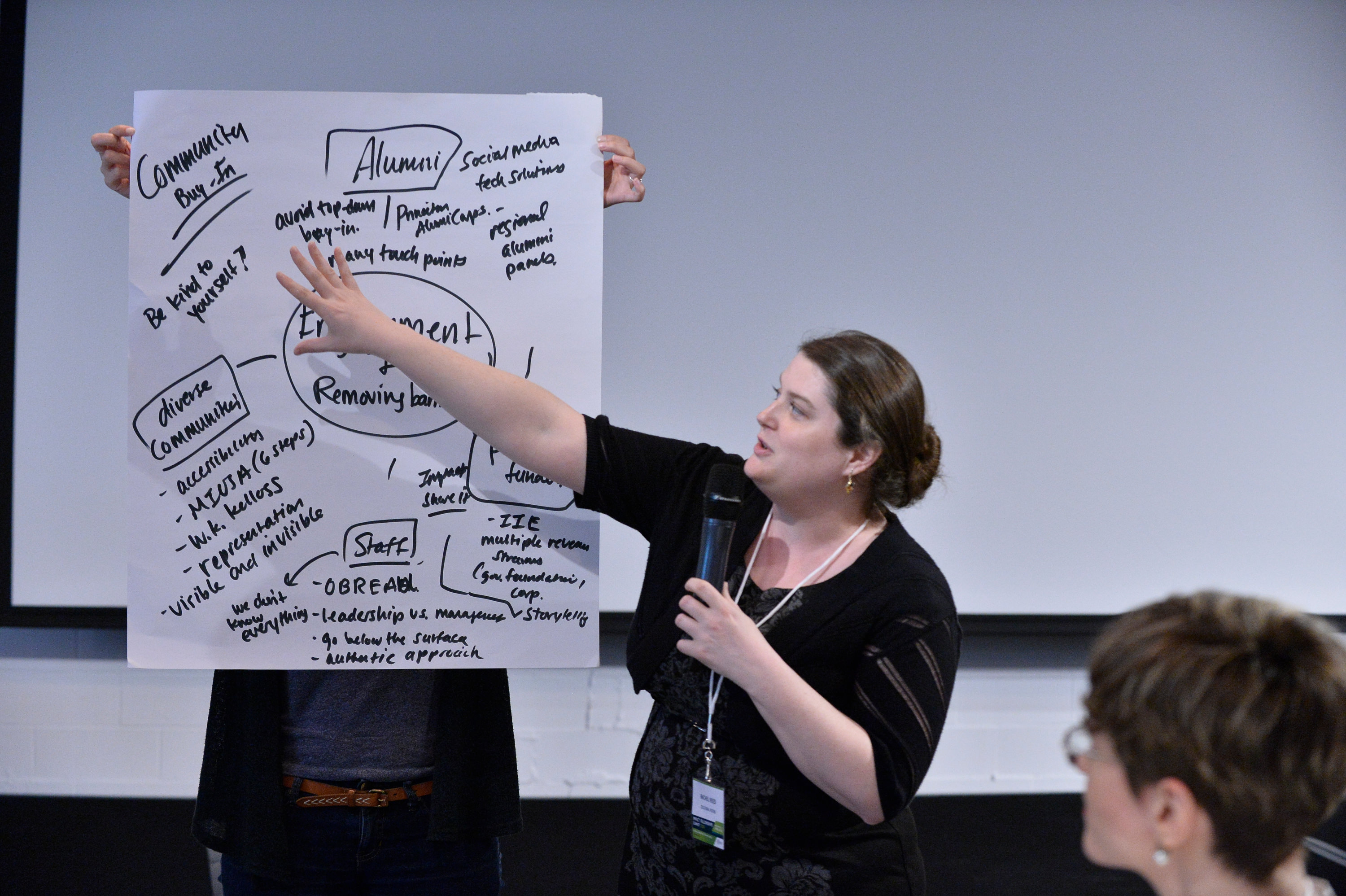
Fellowships are a key investment in leadership development – bridging divides and providing space for leaders at every level to co-create solutions that address emerging problems in their communities and systems. However, organizations that manage fellowship programs face practical challenges like securing funding, managing limited timelines, addressing staff capacity constraints, and providing adequate participant support. These challenges can hinder their ability to capture the long-term impact of fellowship experiences and the lasting relationships that develop from them.
These common barriers highlight the importance of collaborative research, where organizations or communities unite around a shared research goal. This allows practitioners to explore the ripple effects of their programs and inform practical improvements to strengthen the impact of fellowships across the sector. What distinguishes collaborative research from traditional research driven by an individual organization or community is the advancement of three key activities:
- Developing a shared mission
- Convening diverse expertise
- Building sustainable partnerships
As a leader in the fellowship sector with more than 50 years of experience, IREX serves as the host of the annual Impact Fellowships Summit (IFS) – the flagship convening for fellowship leaders, designers, and practitioners. In partnership with the W.K. Kellogg Foundation in 2022, IREX facilitated the Fellowships Alumni Network Study (FANS) which brought 20 organizations from the IFS community together to explore the role of fellowship networks in supporting alumni impact. Building on this momentum over the past year, the Impact Fellowships Network (IFN) engaged 23 fellowship organizations to conduct an Impact Study that will be a central resource shared at the upcoming IFS on April 27-30, 2026. The study explores the following research questions:
- To what extent do diverse strategies facilitated by fellowship programs support alumni in contributing to changes at different levels of society (i.e. individual, institutional, community, systems)?
- How does the design of fellowship programs influence administrators’ ability to effectively support alumni in contributing to changes at different levels of society?
- What are effective resources and approaches to evaluate the impact of fellowship programs in supporting alumni contributions to change?
Building off the FANS model, the IFN team worked with each partner in the Impact Study to advance every component of the research process. This included designing data collection tools, facilitating data collection activities with their fellowship networks, and conducting data analysis. In total, the IFN Impact Study has reached over 1,000 fellowship alumni, partners, and funders from around the world to inform each of these research questions.
Collaborative research like FANS and the Impact Study aims to deepen our collective understanding of the lasting impact fellowship programs while building a supportive community of practice committed to strengthening leadership development opportunities. The demand for exploring fellowship impact came from the IFS community, which prioritizes approaches that are relevant, responsive, and replicable for program practitioners. These three “Rs” shape how IREX facilitates each activity by recognizing the common interests and priorities within a community while being flexible to the distinct environments each partner navigates. In doing so, collaborative research serves a dual purpose: generating valuable knowledge about fellowship impact and building the capacity and cohesion of the community engaging with the research.
Activity 1: Developing a shared mission
To collaborate effectively on research, organizations must understand how proposed research questions connect to their work and priorities. Rather than presenting partners with a predetermined research plan and building buy-in around that plan, the IFN team facilitated a six-part design series that empowered partners to lead the planning process. This included five community convenings followed by one-on-one consultations to ensure clarity on how the agreed approach could be adapted to their distinct program(s). This allowed space for partners to connect by sharing their unique contexts, challenges, and goals while also receiving tailored support from IFN technical experts.
Throughout this process, only topics and resources that partners found relevant to their work, responsive to their interests, and replicable to their institutional capacities were developed. Partners actively shaped what tools would be used and the parameters in which they would be implemented. This collaborative foundation ensured that every partner’s priorities were reflected in the final research design – transforming what could have been a top-down initiative that narrows the breadth of partners who can participate, into a shared endeavor that represented the broad fellowship community.
View a sample design schedule from the IFN Impact Study.
Activity 2: Convening diverse expertise
Fellowship organizations operate with vastly different program structures, staff capacities, and availability throughout the year. To ensure all partners could meaningfully contribute to and advance research activities, flexible engagement opportunities and supportive technical assistance were essential. IREX addressed these needs by organizing partners into the following tiered engagement tracks:
- Co-design partners worked closely with the IFN team throughout the entire research process to synthesize feedback and inform decisions.
- Network partners provided critical feedback on key milestones, ensuring the research remained relevant, responsive, and replicable for practical implementation.
- Impact Grant partners expanded on developed resources to conduct more in-depth research to complement the broader study.
To provide supportive technical assistance, IREX adopted a range self-paced, live, and follow-up training opportunities so partners could engage comfortably in research activities. A series of workshops and training videos demonstrated how to conduct a range of data collection activities using Kolab, an innovative engagement A.I.-enhanced platform that allows for different engagement and facilitation styles. Weekly office hours provided a space for troubleshooting challenges as they emerged, and one-on-one consultations were offered to confirm timelines, document necessary template adjustments, and provide technical support based on each organization's needs. This flexible and individualized support ensured that the research process genuinely served organizations across the spectrum – making participation both rigorous and accessible.
Activity 3: Building sustainable partnerships
Building strong partnerships with and within a collaborative research community is a key outcome towards turning insights into meaningful action across the sector. Providing a space like IFS for partners to build on their research experience with each other and others outside of the immediate research community can catalyze this process.
Over the past ten years, IFS has served as this space for the fellowship community, bringing together over 650 fellowship leaders, designers, and practitioners to discuss relevant issues, respond to emerging challenges, and co-create innovative solutions. Not only has IFS provided a key recruitment source for partners to participate in collaborative research studies, but it has also provided a strong platform to promote findings and build awareness on emerging strategies. Importantly, IFS and the broader IFN program provide a clear purpose and community beyond the research process itself for partners to engage in and build on their experiences at their own pace.
Registration for IFS 2026 is now open. If you are interested in collaborating and developing partnerships with other practitioners, join us to gain insights from the Impact Study findings, hear directly from consortium partners about their experiences, and explore how collaborative research can inform your own program's approach to understanding and strengthening fellowship impact.
Whether you're looking to develop your organization's evaluation capacity, connect with peers facing similar challenges, or contribute to shaping the future of the fellowship sector, IFS 2026 offers the space and community to do so.
Effective collaborative research requires intentional facilitation of three interconnected activities: developing a shared mission that creates genuine ownership across diverse organizations, convening diverse expertise through structured yet flexible engagement, and building sustainable partnerships that strengthen the community beyond the research itself. When these activities work together, grounded in relevance, responsiveness, and replicability, collaborative research becomes a catalyst for both individual organizational learning and sector-wide transformation.