
Teachers in AI-Enabled Classrooms
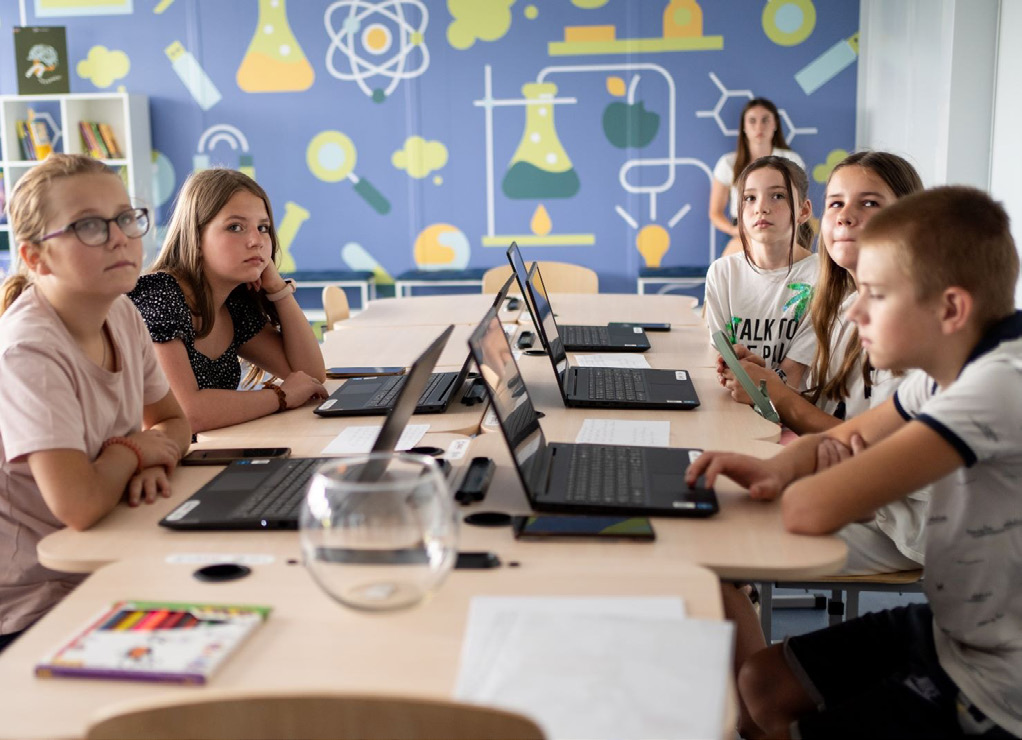
IREX advances practical, teacher-centered approaches to AI in education by linking research, system reform, and classroom practice. In Jordan, IREX and Development Gateway are partnering with the Ministry of Education to pilot an AI Accelerator that integrates readiness diagnostics, upskilling, and tool testing to support safe and equitable system-wide adoption.
As artificial intelligence (AI) rapidly enters classrooms around the world, educators, policymakers, and training institutions face an urgent question: How is AI changing the role of the teacher and what new skills do teachers need to thrive? This isn’t just a theoretical question any longer: the OECD’s 2024 Teaching and Learning International Survey indicates that more than a third of lower secondary teachers across the OECD region reported using AI in the last year.
While much of the global conversation has focused on tools and technologies, AI is already reshaping the everyday dynamics of teaching and learning. At the same time, much of the attention around AI and education falls into one of two extremes: on the one hand, this space is filled by tech platforms that are looking to sell software and packaged professional development courses to educators. On the other hand, there are global policy institutions setting out the parameters for how education policy should meet the AI moment.
At IREX, we see a missing middle in this conversation: the need for practical, pedagogy-grounded frameworks that help teacher training institutions and education systems understand how AI is being used in classrooms; make sense of how the teacher’s role is evolving as a result; and understand what skills educators need now as they engage with AI.
What's inside:
Drawing on international research, policy frameworks, classroom examples, and educator expertise, we outline a typology for understanding how AI is currently being used in K–12 classrooms and how those patterns of use affect the role and responsibilities of teachers.