
REQUEST FOR APPLICATIONS (RFA) Final Cumulative Evaluation of the IREX Ambulantes Program
Subject: Request for Applications (RFA) for the Final Cumulative Evaluation of the IREX Ambulantes Program (Phases I, II, and III)
Closing Date: 3/31/26
Estimated Period of Performance: May 2026 – May 2027 (approximately 12 months)
This Request for Applications outlines the information required by the applicant for the development and submission of a proposal for consideration. The potential applicant is expected to review, understand, and conform with specifications contained in this RFA.
Issuance of this RFA does not constitute an award commitment on the part of IREX nor does it commit IREX to pay for costs incurred in the preparation and submission of an application. The application is submitted at the risk of the applicant. All preparation and submission costs are at the applicant’s expense. The timeline for the evaluation will be determined between the selected applicant and IREX.
Thank you for your interest in IREX activities.
SECTION I: FUNDING OPPORTUNITY DESCRIPTION
Program Background
IREX implements the Ambulantes program in Mexico to strengthen the capacity of local and international civil society organizations to provide improved services to internal agricultural migrant workers (jornaleros) and their communities of origin, promote safer migration, and contribute to systemic change in how institutions understand and respond to the needs of this vulnerable population. IREX implements the program in partnership with civil society organizations based in Mexico and the United States.
There are an estimated 2.3 million internal agricultural migrant workers in Mexico, many of whom are vulnerable to labor exploitation and face numerous risks throughout their migration and recruitment journey. These workers predominantly come from poor central and southern states, where a lack of economic alternatives makes migration a survival strategy. Indigenous people, who represent over 23% of internal agricultural migrants nationally, are disproportionately affected—many lack official permanent residences and do not speak or read Spanish, hindering their ability to access government services, understand employment agreements, or engage legal support. Internal agricultural migration in Mexico remains significantly underrecognized among key institutions, despite the essential role that jornaleros play in national food production.
The Ambulantes program has been implemented in three phases: Ambulantes I, Ambulantes II, and Ambulantes III, spanning approximately six years of cumulative programming in the states of Oaxaca, Veracruz, Guerrero, and Morelos. Over the course of the program, Ambulantes has reached over 10,000 prospective migrants and community members with information to enable safer migration through in-person events and printed materials, over 600,000 people through radio, and over 1 million through social media. The program has strengthened partner organizations’ capacities in areas including legal support, fundraising, service delivery, and community engagement.
Evaluation Purpose and Objectives
IREX will conduct a final cumulative evaluation of the Ambulantes program (inclusive of Ambulantes I, II, and III) to assess the program’s cumulative impact and capture learnings and recommendations over its approximately six years of operation. The evaluation will be designed and implemented by an external MEL consultant or firm based in or with significant experience working in Mexico, in close collaboration with IREX and program partners.
The objectives of this evaluation are to:
- Assess the cumulative impact of the Ambulantes program across all three phases on the communities and populations it served.
- Examine the broader effects and systemic changes brought by the program beyond immediate outcomes.
- Identify lessons learned, best practices, and practical recommendations for future programming in the internal agricultural migration space.
Key Learning Questions
The evaluation will be guided by the following key learning questions, which were developed in consultation with the donor and will be further refined with partners during the evaluation design phase:
- To what extent did the cumulative six years of support through the Ambulantes program position local partner organizations to provide improved services to prospective migrants and their families?
- How have the Ambulantes programs impacted the communities of origin and migrants they reached?
- What are the broader effects and changes brought by the program beyond the immediate outcomes, such as systemic changes or transformative impacts?
- To what extent has the data, research, and learning products produced through Ambulantes resulted in any changes in perception or decision making at the individual, organizational, or policy level?
- Was the program able to address the gaps identified by its research?
Targeted Users
Targeted users of the evaluation are IREX, the donor, local and international partner organizations, and other organizations and stakeholders operating in the internal agricultural migration space in Mexico and Latin America. The findings will contribute to effective programming on safer internal migration, inform future investment and coordination among civil society and government actors working with internal agricultural migrant populations, and support public outreach.
Key Considerations
Measuring impact in an internal migration context remains complex. MEL tools must be adapted to account for mobility, language diversity, cultural norms, and limited community trust in formal written data collection methods. Individuals engaging with Ambulantes often have varying levels of awareness of the program, making it difficult to isolate program influence. Capturing outcomes across shifting geographies and populations will require close collaboration with partners and continued investment in flexible, culturally responsive approaches. In addition, the evaluation should be designed to complement the workplan of ongoing Ambulantes phase III activities and evaluators should work closely with IREX to ensure that, where possible, the proposed evaluation places a minimum amount of additional burden on implementing partners. Applicants should demonstrate an understanding of these challenges and propose methodologies that address them.
Expected Activities and Deliverables
The selected consultant or team will work closely with IREX and local partners to design and implement the evaluation. Key activities and deliverables include:
- Evaluation design: In collaboration with IREX and partners, design the scope of work, evaluation framework, key learning questions, and terms of reference for the final evaluation. The evaluation should be designed to capture data and evidence from the full six years of programming across all three phases.
- An inception report: Present a refined scope, detailed evaluation design and methodology, evaluation matrix, data collection tools, and detailed work plan. A draft will be shared with IREX and partners for review. The consultant will maintain an audit trail of comments received and how they were addressed. The consultant will be responsible for ensuring data collection tools are available in Spanish and, where appropriate, in relevant indigenous languages in collaboration with local partners who possess those language capabilities.
- Data collection and analysis: Oversee and conduct primary and secondary data collection, applying flexible, culturally responsive approaches suitable for internal migration contexts. Analyze data to produce actionable insights.
- Presentation of preliminary findings: A presentation detailing emerging findings will be shared with IREX and partners for feedback and validation.
- A draft evaluation report: The draft will be shared with IREX and partners for review, factual verification, and feedback. The consultant will incorporate feedback and maintain an audit trail of comments.
- The final evaluation report: The final report will include a concise Executive Summary and annexes detailing the methodological approach and analytical products. The structure will be defined in the inception report.
SECTION II: AWARD INFORMATION
Subject to the availability of funds and dependent on the final scope of work, IREX expects to award one contractual or consulting agreement of up to approximately $30,000 USD. The maximum estimated period of performance is approximately 12 months (May 2026 – May 2027), though the exact timeline is open to discussion with the selected candidate. IREX reserves the right to fund any or none of the applications submitted.
SECTION III: REQUIRED SKILLS AND EXPERTISE
Competencies
- Sensitivity and adaptability to culture, gender, ethnicity, language diversity, and age, with particular awareness of indigenous communities in Mexico
- Knowledge of (or Familiarity with) migration dynamics and migrant populations in Mexico
- Strong analytical, writing, and reporting abilities
- Strong interpersonal and communication skills; ability to lead or coordinate a team and work collaboratively with a diverse range of stakeholders
- Commitment to quality products and deadlines
- Demonstrated facilitation and communication skills; experience with participatory and culturally responsive approaches
- Ability to produce well-written analytical reports in Spanish and English
- Demonstrated understanding of MEL challenges in migration and mobile population contexts
Qualifications and Experience — Lead Consultant / Team Leader
- At least a master’s degree in social sciences, international development, migration studies, human rights, evaluation, or a related field
- At least 7 years of relevant experience conducting evaluations of development programs, strategies, and/or policies
- Proven experience designing and leading evaluations utilizing participatory, culturally responsive, and rights-based approaches and methodologies
- Knowledge and experience in internal migration, labor rights, and/or agricultural worker populations, preferably in the Mexican or Latin American context
- Experience conducting cumulative or multi-phase evaluations is a strong asset
- Previous work experience in Mexico is strongly preferred
- Fluency in Spanish required; fluency in English required; knowledge of an indigenous language spoken by jornalero communities is a strong asset
Qualifications and Experience — Additional Team Member(s) (if applicable)
For applications submitted by teams or firms, the following qualifications apply to additional team members:
- At least a bachelor’s degree in social sciences, international development, migration studies, human rights, evaluation, or a related field
- At least 3 years of relevant experience conducting evaluations, assessments, studies, or similar learning activities
- Demonstrated skills in evaluation design and methods, including participatory and collaborative approaches
- Demonstrated analytical skills and ability to collect, structure, and analyze qualitative and quantitative data
- Knowledge and experience in migration, labor rights, and/or community development in Mexico
- Fluency in Spanish required; proficiency in English preferred; knowledge of an indigenous language is a strong asset
SECTION IV: APPLICATION AND SUBMISSION INFORMATION
Any questions concerning this RFA should be submitted in writing no later than 3 business days prior to the closing date shown above to Benjamin Brewer, Senior Program Officer, at BBrewer@irex.org. Applicants should retain for their records one copy of all enclosures which accompany their application.
Applications must be submitted to Benjamin Brewer, Senior Program Officer, at BBrewer@irex.org no later than the closing date listed on the front page of this RFA. Pre-award costs are not allowable and will not be reimbursed. The complete application packet must be submitted in the required format with the required attachments.
The Application Must Include:
- CV(s) of the individual consultant (for individual consultancy) or CVs of the Team Leader and team member(s) (for teams or firms)
- Expression of interest demonstrating understanding of the assignment, the internal agricultural migration context in Mexico, and the applicant’s relevant experience
- Technical proposal outlining the proposed methodology for the evaluation, including approach to evaluation design, data collection and analysis techniques, strategies for culturally responsive data collection in migration contexts, and quality control measures
- Detailed budget proposal (all-inclusive, including consultancy fees, proposed number of workdays, travel, accommodation, data collection and analysis costs, translation costs, and any other anticipated expenses)
- Sample of previous work (e.g., an evaluation report from a similar engagement)
Restrictions
- Agreement funds provided under the terms of this RFA shall not be used to procure goods or services from suppliers that may be identified on the USG consolidated list of debarred, suspended, or ineligible subcontractors.
- Any purchases or activities deemed unnecessary to successfully complete the evaluation, including any headquarters expenses not directly linked to implementation of the proposed work.
- Previous obligations and/or bad debts.
- Fines and/or penalties.
Late Applications
Late applications are marked as “late” and are ineligible for review or award; however, IREX reserves the right to accept and include late applications in the review and award process when it is considered within the best interest of IREX to do so and if applications that were received on time have not been opened and reviewed. Applications that are submitted late or incomplete risk not being considered for review.
SECTION V: APPLICATION REVIEW INFORMATION
Within 10 working days of the deadline for submitting applications, a technical review committee will convene. Under unusual circumstances the technical review committee may be delayed. Throughout the evaluation process, IREX shall take steps to ensure that committee members do not have any conflicts of interest or the appearance of such with regard to the organizations or individuals whose applications are under review.
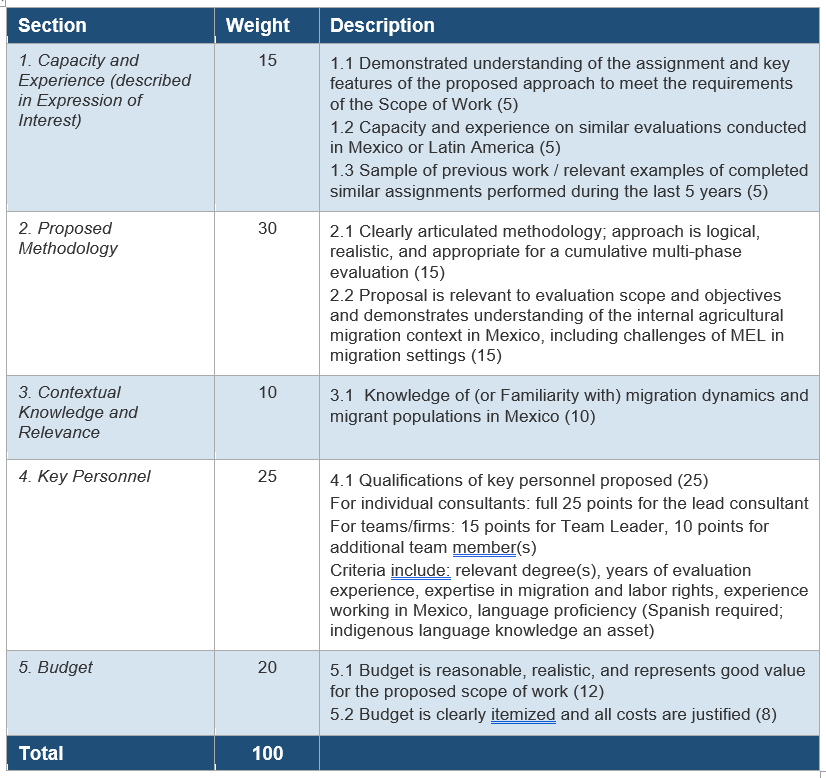
The application will be evaluated according to the evaluation criteria set below. To the extent necessary, negotiations may be conducted with applicants whose applications, after discussion and negotiation, have a reasonable chance of being selected.
Evaluation Criteria
SECTION VI: AWARD AND ADMINISTRATION INFORMATION
The recommendation or selection of an application in accordance with established procedures does not guarantee an award. All applicants must demonstrate that they possess, or have the ability to obtain, the necessary management competence to practice mutually agreed upon methods of accountability for funds and other assets provided.
A successful applicant can expect to receive an agreement, signed by the program. The agreement will be addressed to the organization’s point of contact and/or individual as stated in the application.
Reporting Procedures
A description of reporting requirements will be included in the Agreement. The types of reporting required, along with the schedule of reporting, will depend on the agreement type and project duration. Reporting forms will be provided to recipients. Issuance of the final installment of funds is contingent upon IREX receipt and acceptance of final reports or deliverables.
SECTION VII: OTHER INFORMATION
Issuance of this RFA does not constitute an award or commitment on the part of IREX, nor does it commit IREX to pay for costs incurred in the preparation and submission of an application. IREX reserves the right to fund any or none of the applications submitted. Further, IREX reserves the right to make no awards as a result of this RFA.