
AI for Education: Closing the Governance Gap
As artificial intelligence moves rapidly from pilot projects to everyday use in classrooms, education systems face a critical challenge: governance is not keeping pace with adoption. While AI-enabled tools show promise for improving learning outcomes, many ministries of education, universities, and education leaders lack the policies, accountability structures, competencies, and evidence needed to ensure AI is used safely, effectively, and equitably.
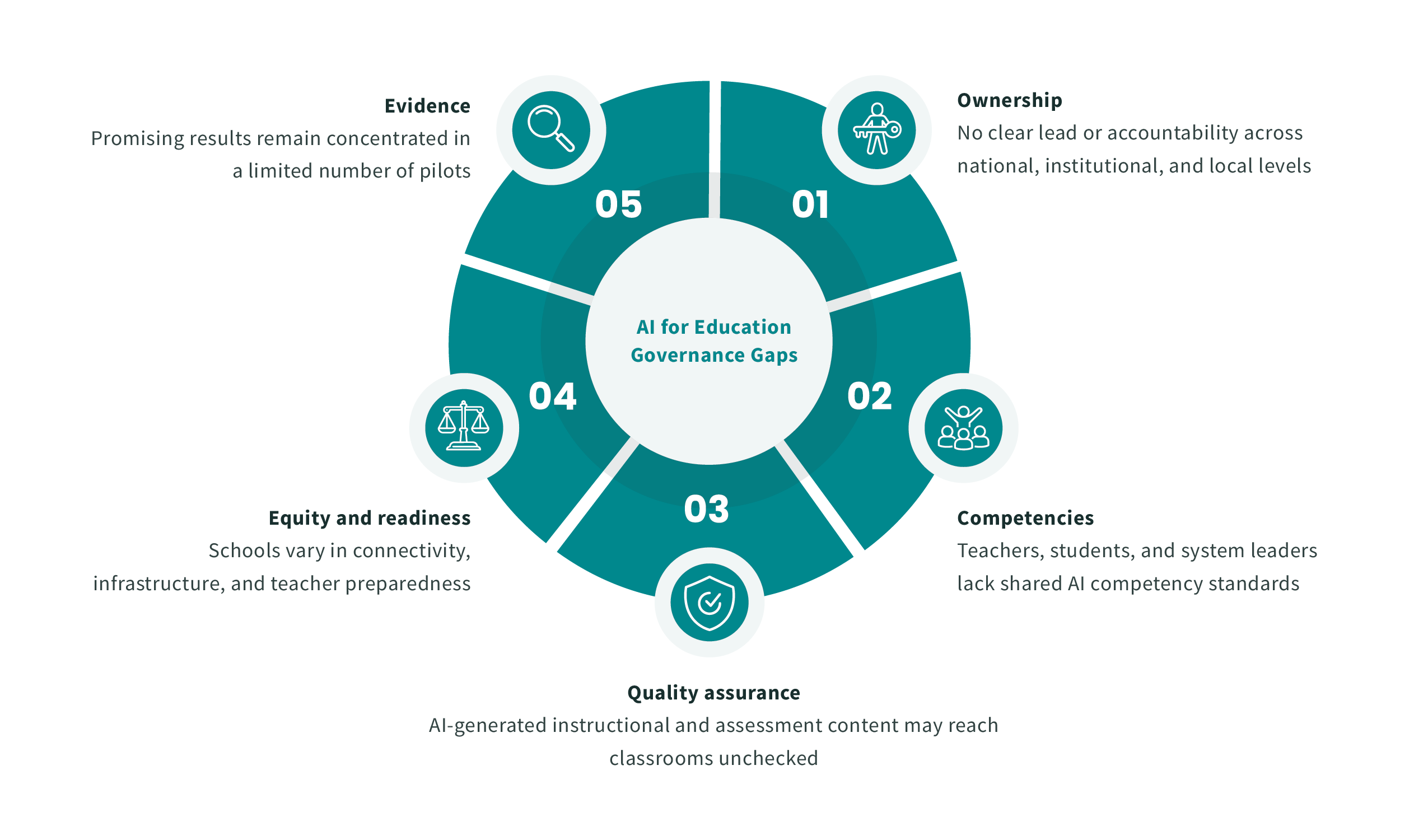
In this policy brief, IREX examines the growing AI governance gap in education and offers practical recommendations for education system leaders. Drawing on IREX's AI for Education diagnostic in Jordan, global research, and emerging country experiences, the brief identifies five critical areas where governance is lagging behind adoption: ownership, competencies, quality assurance, equity and readiness, and evidence.
What You'll Learn
This brief explores:
- Why the central policy question is no longer whether education systems will use AI, but whether they can govern its use before risks become embedded at scale.
- The key governance challenges emerging as AI tools enter classrooms and education institutions.
- Lessons from IREX's national AI for education readiness work in Jordan.
- Five practical actions education leaders can take to strengthen responsible AI adoption.
Key Recommendations
The brief recommends that education systems:
- Assign clear accountability for AI governance before scaling AI-enabled tools.
- Develop AI competency standards for teachers, students, and system leaders.
- Establish quality assurance processes for AI-generated content and tools.
- Sequence AI deployment according to readiness and equity considerations.
- Build local evidence before pursuing large-scale implementation.
Who Should Read This Brief?
This resource is designed for:
- Ministries of education
- Higher education institutions
- Policymakers and regulators
- Education system leaders
- Donors and development partners supporting education reform and digital transformation