
From crisis response to policy change: Strengthening IDP integration in Ukraine
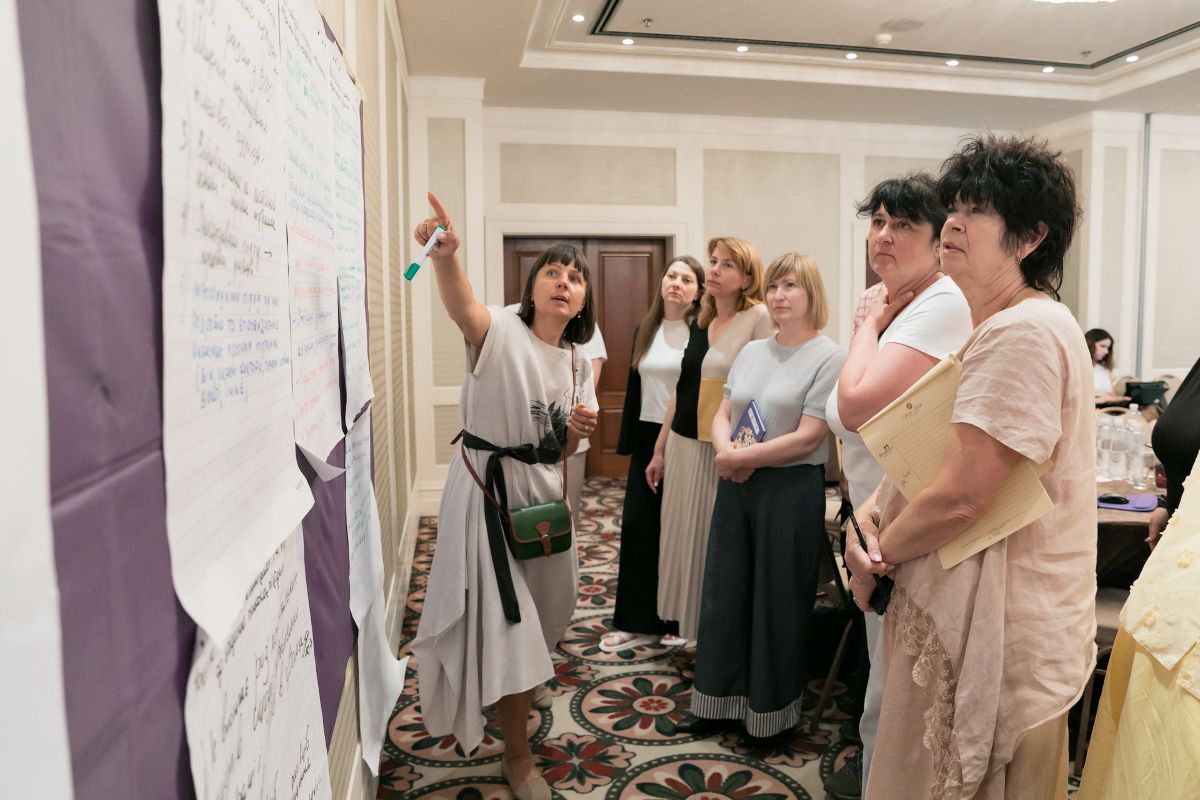
For policymakers working to strengthen Ukraine’s’ recovery, internally displaced persons (IDPs) integration is not a short-term humanitarian issue. It is a long-term investment in people, institutions, and community resilience. This key message guided the strategic session Developing Effective Solutions for IDP Integration Policy, held on July 2 in Kyiv and organized by the IREX-led United Voices in Action program.
The event brought together national and local government representatives, IDP Councils, and international experts to identify practical policy approaches that support social and economic adaptation in communities across Ukraine.
"The priority of the Ministry of Social Policy is to create real, actionable policy rather than abstract documents," said Tetiana Kirienko, Deputy Minister of Social Policy, Family, and Unity of Ukraine. "A strong example is the new IDP Integration Strategy, which includes an operational plan, concrete steps, responsible parties, and clear deadlines. Instead of fragmented solutions, the Strategy offers a comprehensive roadmap for people, from evacuation or departure from temporarily occupied territories to full integration into a new community or returning home. Because needs vary, it also provides targeted support at every stage, including psychosocial assistance, employment, and housing solutions.
Participants emphasized that effective IDP integration is only possible through close collaboration between the central government, local authorities, and displaced people themselves. This approach turns displacement challenges into new development opportunities for host communities.
"What kind of Ukraine will we build for millions who lost their homes but not their right to belong to a community, to work, to make an impact, and to build a future?" noted Yuliya Tkachuk, IREX Country Director for Ukraine. "We have seen how solutions proposed through IDP Councils, in particular, have improved the quality of local governance, living conditions, and overall quality of life—not just for displaced individuals, but for all community residents. This inclusivity—the right of everyone to have a voice and shape the future of their family and country—is a cornerstone of good democratic governance. This trajectory brings us closer to EU accession and aligns with the best European practices."
Building practical pathways for integration
The event highlighted five years of work of the United Voices in Action program and shared tools that policymakers and local leaders can use to improve IDP integration in communities. The discussion focused on three strategic priorities: strengthening IDP IDP Councils, expanding psychosocial support, and supporting economic integration. Among these, IDP Councils have become one of the program’s flagship achievements.
"An IDP Council is a tool that transitions people from being passive aid recipients to local decision-makers," explained Tetiana Dementieva, United Voices in Action Program Senior Manager. "Setting up a Council is just the beginning. Its success relies on three factors: awareness, continuous capacity building, and dialogue. Our research shows that consistent engagement causes participation levels to skyrocket. Awareness of IDP Councils among our program participants stands at 69%, compared to 40% nationwide. We have provided methodological and mentoring support to hundreds of councils, training over 1,600 representatives. Our main milestone is a drafted framework for involving IDP Councils in local policymaking, which we have officially submitted to the Ministry of Social Policy and Regional Military Administrations (RMAs)."
A lasting legacy for communities
As the United Voices in Action program concludes its active phase, it leaves government institutions and communities with sustainable institutional tools for continued action: updated regulations, proven methodologies, and a robust network of IDP Councils that will continue to inform policy and practice at the state level.
IREX thanks its partners and donors for supporting collaborative solutions that are helping shape Ukraine's social policy.