
CEE Tech for Impact Summit
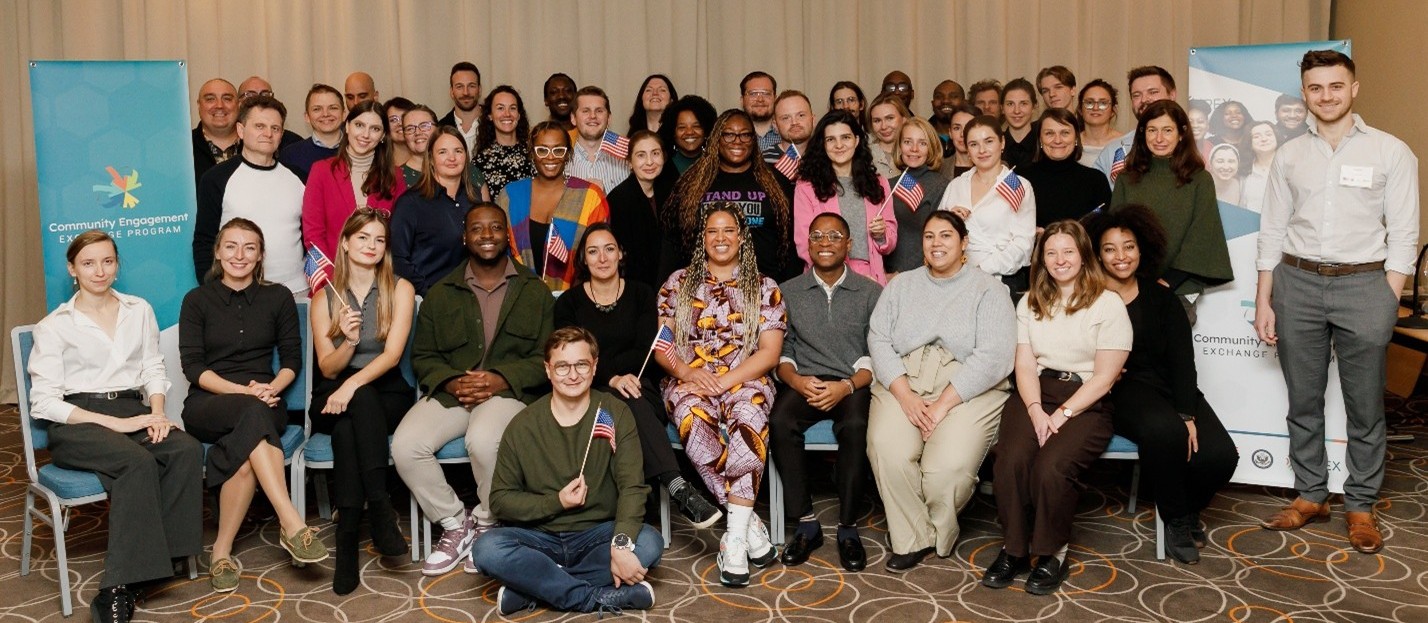
The CEE Tech for Impact Summit brought together emerging civic and community leaders from the United States and the Visegrád Four countries including Czechia, Hungary, Poland, and Slovakia to strengthen practical artificial intelligence skills and deepen U.S.-Central Europe partnerships rooted in innovative technology. Hosted in Warsaw in partnership with the U.S. Embassy in Poland, the Summit convened 46 participants including representatives from U.S. organizations, CEE alumni & incoming fellows, CEE Mentors, and regional civil society leaders.
The Summit advanced U.S. interests by expanding America’s leadership in emerging technologies, strengthening ties with collaborators in Central Europe, and equipping participants with practical tools that improve organizational efficiency, resilience, and long-term community stability. Participants received direct exposure to American approaches to innovation, entrepreneurship, and AI adoption.
Summit Focus Areas
Over three days, participants explored how artificial intelligence can strengthen community-focused organizations and improve operational effectiveness. Sessions focused on practical applications of AI that help organizations save time, improve communication, strengthen fundraising, and make better use of data.
Featured sessions included:
- Demystifying AI for Community Leaders
- Responsible AI in Practice
- Analyzing Data with AI
- Fundraising with AI
- Saving Steps with Automations
Sessions led by American and Polish experts highlighted practical applications of generative AI, responsible innovation, and emerging opportunities for U.S.-Central Europe collaboration in technology and entrepreneurship. Participants also visited local innovation hubs and engaged in peer-led workshops designed to strengthen long-term professional networks and collaboration.
Impact
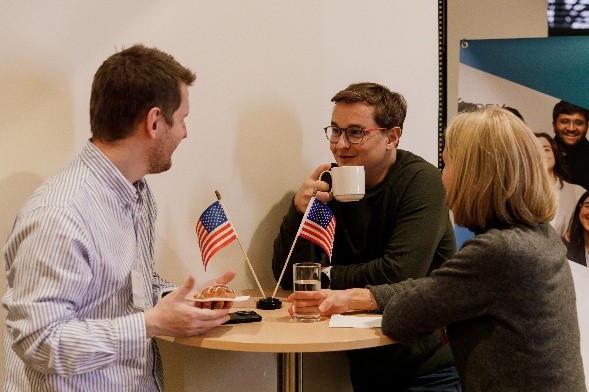
- 98% of survey respondents strengthened their technical skills through participation.
- 95% of respondents who did not previously feel comfortable using AI tools for work-related tasks reported increased confidence after the Summit.
- 93% of surveyed participants reported that AI tools introduced through the Summit led to measurable productivity gains or organizational cost savings in their work.
- Approximately 70% of participants used their Summit technology stipend to purchase or expand subscriptions to American-developed AI platforms and tools including ChatGPT, Gemini, Claude, Canva Pro, and related U.S.-based technologies, reinforcing American leadership in the global AI marketplace.
- 100% of respondents who were previously unlikely to use AI tools for work-related tasks reported they were likely to use them after the training.
Outcomes: Generating a Strong Return
Demonstrating strong return on investment for the United States, multiple participants reported reducing administrative and drafting workloads by 50-90%, allowing organizations to redirect staff time toward community outreach, strategic planning, and enhanced service delivery. Participants also increased their use of American-developed AI platforms and tools, reinforcing U.S. leadership in responsible innovation and practical technology adoption.
- After attending the Summit, U.S. participant April Williamson used AI tools introduced through the program to strengthen communications, strategic planning, and funding development work at Digital Promise. AI-assisted content development helped launch the organization’s new LinkedIn newsletter, Global Education Pulse, which has already attracted more than 6,800 subscribers. Williamson also used AI to support strategic market analysis, develop outreach campaigns, refine grant proposals, and synthesize stakeholder feedback for international education initiatives. She reported that AI tools enabled her small team to significantly expand its operational reach while freeing staff to focus more directly on partnerships and mission delivery.
- U.S. participant Kaprece James reported that AI tools introduced through the Summit reduced the time required to draft major funding proposals from as much as 15 hours down to approximately four hours. James also noted that AI-supported workflows significantly improved social media communications and helped expand collaboration opportunities with both American and European partners following the Summit.
- U.S. participant Ed Pettitt reported that AI tools introduced through the Summit helped identify numerous new grant and sponsorship opportunities in Houston. Pettitt estimated that AI-assisted workflows are saving his organization approximately $1,000 per week by reducing reliance on outside consultants, editing services, and research support while allowing staff to respond more quickly to funding and partnership opportunities.
These outcomes demonstrate how American-led technology training can advance practical innovation, workforce readiness, and responsible AI adoption in the U.S. and abroad.
Demonstrating U.S. Leadership
The Summit reinforced America’s role as a leader in responsible technology innovation. Through direct collaboration with U.S. experts and organizations, participants gained firsthand experience with American approaches to innovation, entrepreneurship, and institution-building while strengthening relationships that support long-term cooperation between the United States and Central Europe.
Each participant concluded the Summit by developing an AI Action Plan to implement within their organization or community following the program. Ongoing peer engagement and follow-up support from U.S. experts will help participants apply practical lessons learned through the Summit in ways that strengthen local organizations, improve operational effectiveness, and expand durable partnerships with the United States.
“All the content that we've been learning has been transformative in terms of my experience with AI,” said U.S. participant Handy Dorceus. “I'm looking forward to implementing everything I've learned with my organization, and in my life and personal business.”