 1. Clearer Pathways into Employment
HEIG is helping universities move beyond traditional classroom teaching.
Students are gaining opportunities to:
- Develop market-relevant skills
- Participate in experiential learning
- Engage directly with employers
- Access mentoring opportunities
- Participate in applied research
- Build practical experience before graduation
Together, these approaches help universities create stronger, institutionally sustained pathways from learning to employment.
2. Employers as Partners in Workforce Development
One of HEIG's defining features is that employers are not simply advisors; they are active partners and investors.
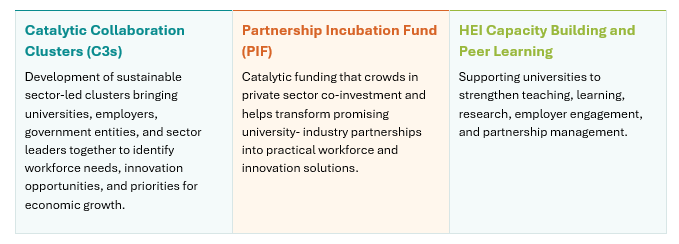
Through collaboration clusters and partnership investments, employers help:
- Inform curriculum improvements
- Identify workforce priorities
- Support experiential learning
- Provide mentorship opportunities
- Participate in applied research
- Create employment pathways
- Invest in workforce development activities
Employer Engagement at a Glance
Through HEIG-supported partnerships, employers collaborated with universities to:
- Shape curricula around priority skills
- Provide internships, mentorship, and applied learning
- Co-design research and innovation activities
- Contribute technology, facilities, expertise, and financing
- Help create clearer pathways from education to employment
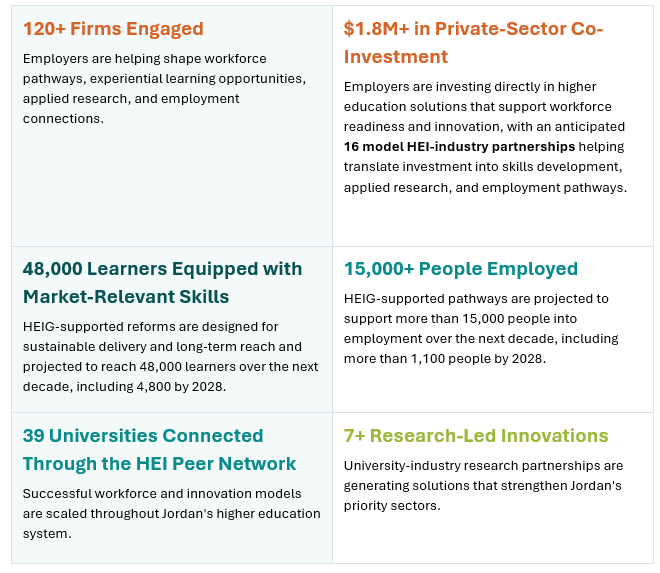
To date, private-sector partners have committed more than $663,000 to HEIG-supported workforce and innovation solutions.
3. Innovation for Economic Growth
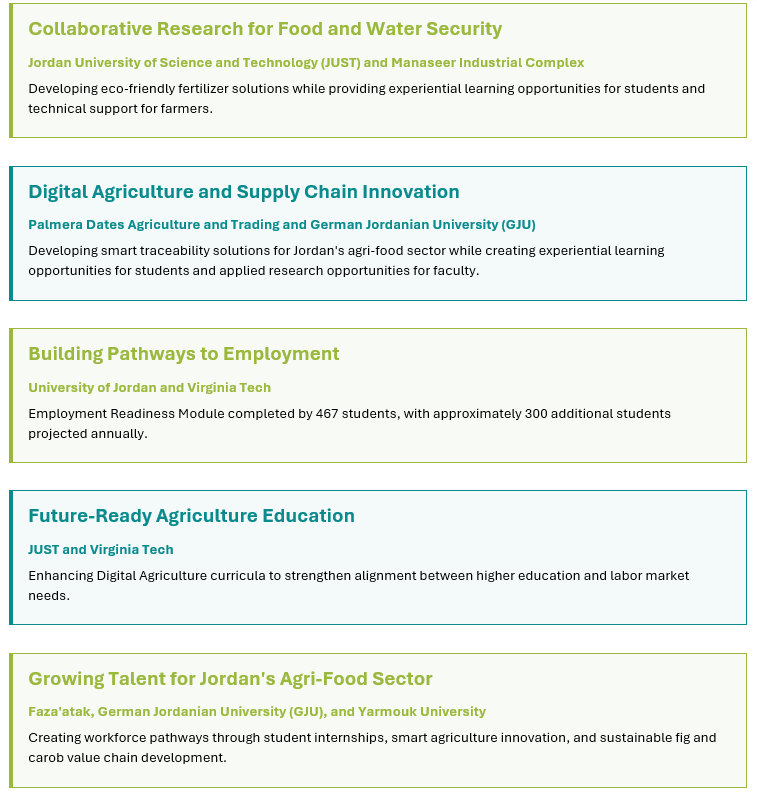
HEIG supports applied research partnerships that generate practical solutions for Jordan's growth sectors while strengthening workforce outcomes.
- Sustainable agriculture innovations
- Precision agriculture technologies
- Digital agriculture modernization
- Technology-enabled workforce solutions
Innovation is not pursued for its own sake. It is used to help students gain practical experience, support employer competitiveness, and strengthen economic growth.
4. Future-Ready Higher Education
HEIG supports the policies and systems needed to sustain workforce development and innovation.
- Collaboration with the Accreditation and Quality Assurance Commission (AQAC) for employer-responsive policy development
- Responsible AI frameworks for higher education
- Micro- and nano-credential pathways
- HEI Peer Network activities.