
UASP fellows driving institutional improvements in research management across Africa
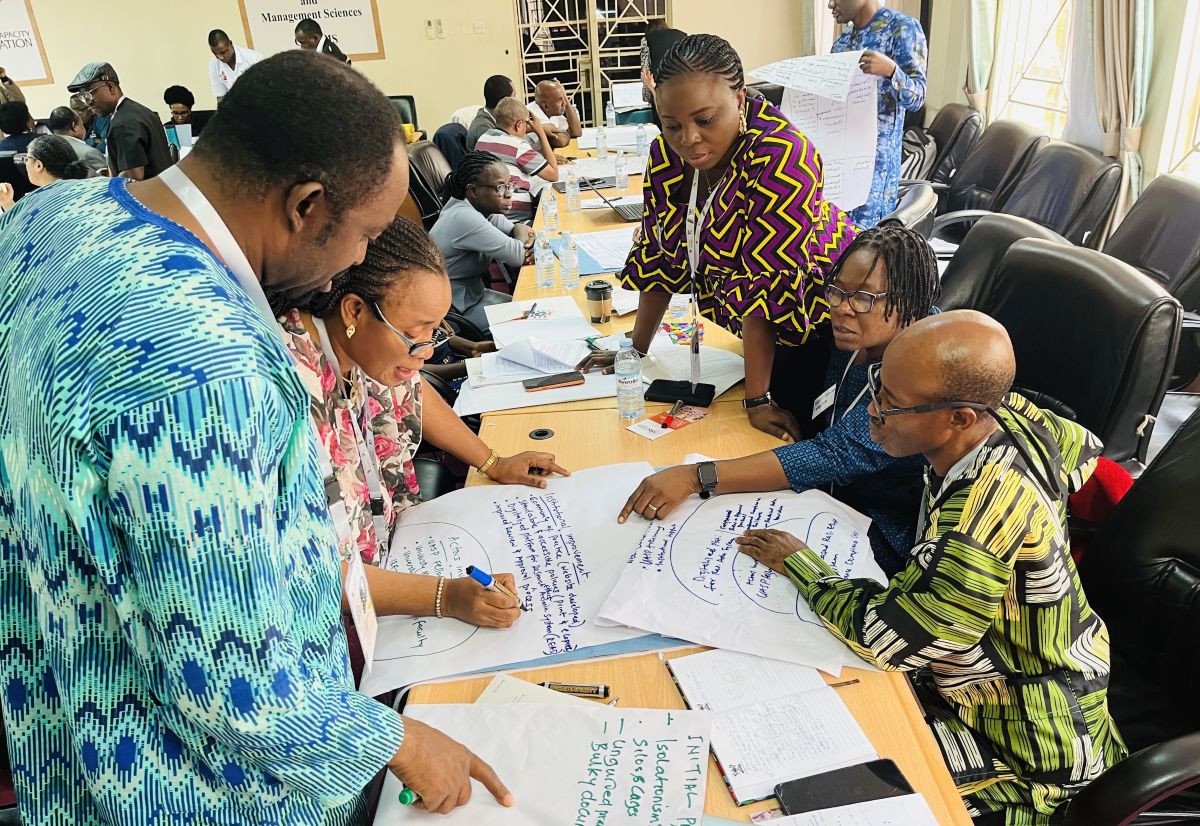
An independent impact evaluation of the University Administration Support Program (UASP), conducted by Global Insight, finds that strategic investment in mid‑ and senior‑level university leaders, paired with peer collaboration and implementation support, contributed to sustained individual and institutional improvements in research management. The evaluation shows that these effects were strongest at institutions where 10 or more alumni were working together.
Designed and implemented by IREX between 2016 and 2026, with funding from the Carnegie Corporation of New York, UASP worked with 20 universities in the African Research Universities Alliance (ARUA) to strengthen and professionalize research management. As universities face increasing expectations to compete for international research funding, comply with complex donor requirements, and translate research into real‑world impact, effective research management systems play a critical role in institutional success.
Through UASP, IREX delivered a people‑centered solution to a systems‑level challenge, investing in the professionals who enable those systems to function–academic and administrative professionals responsible for incentivizing research, securing and managing research funding, overseeing ethics and compliance, and supporting the uptake and application of research. The program combined applied training in research management and leadership, peer learning, exposure to international best practices, coaching, and small grants to help participants implement institution‑level reforms. Over time, UASP evolved from a fully in‑person model to include hybrid and online delivery formats.
Global Insight's quasi‑experimental, mixed‑methods evaluation design examined whether UASP’s investment in individuals translated into lasting changes for individual participants and their institutions. The study compared outcomes for 148 UASP alumni with two comparison groups (357 respondents total), used statistical effects to isolate UASP’s effects, and conducted interviews and focus groups to complement survey results and explore how change occurred.
Key findings include:
Alumni widely experienced UASP as a turning point in how they do their work, strengthening core capabilities. More than 70% of alumni said the program had a major influence on their research management practices, professional growth, and career pathways.
Compared with peer groups, UASP alumni demonstrated significantly greater confidence in core research management tasks such as grant proposal development, navigating institutional processes, and influencing research management organizational change.
Alumni of UASP in‑person and hybrid programs outperformed comparison groups in professional development and engagement in research management practices. These alumni reported levels closer to “significant improvement” in professional development and “more frequent” participation in research management responsibilities, while control groups and fully online participants reported more modest gains.
UASP helped build a durable community of practice that enables ongoing information sharing and problem-solving. 86% of alumni gained new professional connections. Alumni of in‑person and hybrid cohorts reported more frequently interacting with research management peers relative to the comparison groups.
Alumni density and collaboration amplified institutional impact. The likelihood of reporting institutional improvements increased as the number of UASP alumni within an institution grew. Among sister universities (with no alumni), the probability of reporting institutional improvements was around 50%. This rose to ~55% at institutions with 10 alumni, 60% or higher at 20 alumni, and nearly 70% at institutions with 30 or more alumni. A similar pattern was observed for joint alumni action. The evaluation suggests that coordinated action—supported by trust, complementary roles, and collective leadership skills—was key to translating individual learning into institutional reform.
UASP contributed to meaningful improvements in alumni institutions’ research management systems. Strongest effects occurred among alumni of the in-person participation model, where university leaders participated in UASP, and where alumni were able to access funding to catalyze ideas. 89% of alumni reported that UASP had a moderate-to-major influence on their institution’s research management practices, and 87% linked moderate or significant improvements to participation.
UASP alumni most consistently influenced change in the areas of research management strategies, policies and procedures, ethics and IRB systems, grant submission processes and win rates, and inter‑institutional partnerships. More resource‑intensive changes (for example, establishing or restructuring offices, or introducing new technology or equipment) and shifts in research dissemination, visibility, and technology transfer, were less consistently observed. Change in these areas typically depended on active alumni collaboration alongside access to implementation funding, including UASP small grants.
Why it matters
UASP provides evidence that strategic investment in individual leaders can contribute to lasting improvements in professional practice and, under the right conditions, to institution- or organization-wide systems of change. However, outcomes depend on how programs are designed.
Recommendations
Based on these findings, the evaluation suggests the following design priorities for funders and program implementers to create conditions which position individuals to translate their capabilities into institution level reform:
Invest in complementary teams within an institution rather than isolated individuals.
Supporting cohorts of 5-10 fellows per institution per cycle with overlapping functional roles helps generate collective momentum and accelerate shared institutional initiatives.
Embed peer engagement and skills for collaboration and influence.
Institutional reform depends less on alumni numbers than on how effectively alumni collaborate. Programs should build skills in networking, teamwork, stakeholder engagement, and advocacy, reinforced through integrated peer learning and alumni activities.
Engage institutional leaders early and to the extent possible.
This strengthens alignment, authorization, and support for alumni’s implementation.
Pair training with flexible implementation funding to catalyze change.
Small, targeted grants enable UASP alumni to move from ideas to action—particularly for systems development and technology or infrastructure upgrades, which can be costly.
Prioritize delivery models that foster deep exposure and engagement.
Where resources allow, hybrid or in‑person programs may offer advantages over fully online formats by more readily supporting lasting peer connections, immersive applied learning, and protected time away from routine duties for strategic reflection and planning.
Access a printable summary of findings.
To request the full evaluation report, or to learn more about IREX Higher Education Services & Solutions, please contact Rebecca Ward at rward@irex.org.